Showing posts with label Summit. Show all posts

2018-07-19

The #AWS World Shook and Nobody Noticed

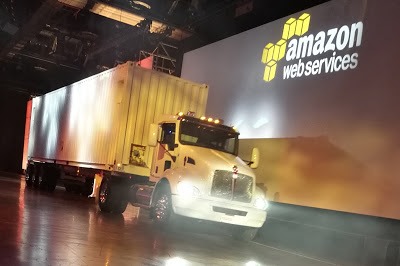
A few days ago at the AWS Summit in New York there was an announcement which in my honest opinion went very noticeably under the radar and i don't think many people understand exactly what it means.
The announcement i'm talking about is this one EC2 Compute Instances for Snowball Edge
Let's dig into the announcement. There are new instance types released the sbe1 family which can been on AWS Snowball Edge device which essentially a computer with a lot of disks inside.

The Snowball is a service that AWS provides to enable you to upload large amounts of data from your datacenter up to S3. Since its inception it is actually a very interesting concept and to me it has always been as a one off way enticing you to bring more of your workloads and your data in a much easier way to AWS.

I also posted this on Twitter

Since its inception AWS has always beaten the drum and pushed the message that everything will run in the cloud - and only there. That was the premise they build a large part of their business model upon. You don't need to run anything on-premises because everything that you would ever want or ever need is available on the cloud, consume as a service, through an API.

During the course of my career a number a number of times the question came up asking, "Does AWS deploy on-prem?" Of course the answer was always "No, never gonna happen."

Most environments out there are datacenter snowflakes, built differently, none of them look the same, have the same capabilities, features or functionality. They are unique and integrating a system into different datacenters is not easy. Adapting to so many different snoflakes is really hard job, and something we have been trying to solve for many years - trying to build layers of abstraction, automation and standards across the industry. In some way we as an idustry have suceeded, and in others we have failed dismally.

In June 2017 AWS announced general availability of GreenGrass. A service that allows you to run Lambda functions on Connected devices wherever they are in the world (and more importantly - they are not part of the AWS cloud).

This is the first leg in the door - to allow AWS into your datacenter. The first step of the transformation.

Back to the announcement.

It seems that each Snowball is a server with approximately 16 CPUS's and 32GB of RAM (I assume a bit more to manage the overhead for the background processes). So essentially a small hypervisor - most of us have servers which are much beefeir than this little box - as our home labs or our laptops even. It is not a strong machine - not by any means.

But now you have a the option to run Pre-provisioned EC2 instances on this box. Of course it is locked down and you have a limited set of functionality availble to you (the same way that you have a set of pre-defined option availble in AWS itself. Yes there are literraly tens of thousands of operations you can perform - but it is not a free for all).

Here is what stopped me in my tracks

EC2_endpoint
Connecting and Configuring the Device
After I create the job, I wait until my Snowball Edge device arrives. I connect it to my network, power it on, and then unlock it using my manifest and device code, as detailed in Unlock the Snowball Edge. Then I configure my EC2 CLI to use the EC2 endpoint on the device and launch an instance. Since I configured my AMI for SSH access, I can connect to it as if it were an EC2 instance in the cloud.

Did you notice what Jeff wrote ?
"Then I configure my EC2 CLI to use the EC2 endpoint on the device and launch an instance"

Also this little tidbit..

S3_Endpoint
"S3 Access – Each Snowball Edge device includes an S3-compatible endpoint that you can access from your on-device code. You can also make use of existing S3 tools and applications"
That means AWS just brought the functionality of the public cloud - right into your datacenter.

Is it all the bells and whistles? Infinitely scalable, can run complex map reduce jobs? Hell no - this is not what this is for.  (Honestly - I cannot actually think of any use case that I personally would want to run a EC2 instance on a Snowball - at least not yet).

Now if you ask me - this is a trial balloon that they are putting out there to see if the solution is viable - and something that their customers are interested in using.

If this works - for me it is obvious what the next step is. Snowmobile 
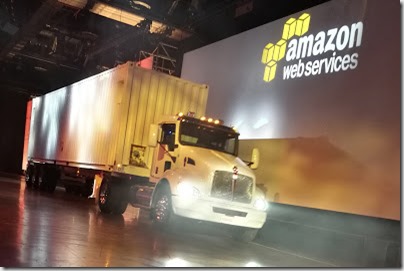
SnowMobile

Imagine being able to run significantly more workloads on prem - same AWS experience, same API - and seamlessly connected to the public cloud.

Ladies and gentlemen. AWS has just brought the public cloud smack bang right into your datacenter.

They are no longer only a public cloud only company - they provide hybrid cloud solutions as well.


If you have any ideas for a use case to run workloads on Snowball - or if you have any thoughts or comments - please feel free to leave below.

2016-10-25

Pre-OpenStack Summit Post

I am on my way to the summit – cutting it fine, as I will only be arriving after the keynotes have started on Day 1. That is part of my life being a religious orthodox Jew.

Just a few hours ago, I finished the festival of Sukkot, a festival where we ‘leave’ our homes for 8 days and move to a temporary house. Well not really leave the house – but we eat all our meals in the Sukkah for the whole festival.

It symbolizes the fact that we have faith in G-d and remember that life is was not so easy and that we left slavery in Egypt many years ago to become a free nation.

Going back to the title of the post.

Barcelona Summit

The main reason I am going to this summit is because I am co-presenting a session on the work
Shamail Tahir and myself have been leading with the Active User Contributor (AUC) working group over the past few months.

If you are interested in more details about the work – I will not rehash the post that has already been published - Recognizing active user contributors to OpenStack.

Please take a minute or three to read it over.

Great!! You are back.

I think that we are at a time where OpenStack is about to change, and for the better. Traditionally Operators and Users have been neglected left out of many of the decisions made in the projects, something which I have vocally opposed many a time (you can find most of my posts here) especially this one - We Are All OpenStack! Are We Really????.

A number of things have happened recently – and will continue to evolve over the next few months – which will enable Users and Operators to actually have a voice (at least that is my true hope and belief).

Proper representation, real recognition, and hopefully some more influence in directions and perhaps also priorities.

If you are going to be at the summit, make sure you join Shamail and myself presenting the work that was done over the past few months.

I hope that one day we will be able to look back on the past and reflect on a time once past, and understand that we are all now one community.

Looking forward to see you there!

2015-07-29

OpenStack Summit Voting - By the Numbers

I love diving into numbers – especially when it has something to do with technology conferences.

But before I do that I would to bring to your attention my two sessions that I have submitted for the upcoming summit (Shameless Plug.. )

Me Tarzan, you Jane (or Operators are not Developers)

Welcoming Operators to the OpenStack Jungle.

A year ago I set out on a journey on trying to help the OpenStack developer community understand the other (and sometimes not well understood) side of the OpenStack community, its users.

Users is a subjective term, depending on who you ask - it could mean the end user using an API or a GUI to deploy a new instance but it also includes those who operate the cloud, maintain it and sweat blood an tears to just allow the end-user to do what he wants.

There is distinct separation today between the two entities - but the good part is that they are slowly coming together.

This talk will describe how you an Operator can make a difference - be it small or large - in OpenStack.

The topics we will go over here are:

  • Initiatives
  • User Committee
  • WTE
  • ISV
  • Monitoring & Logging
  • Large Deployments
  • ... and many more....

Operator specific activities:

  • Ops Tags
  • IRC
  • Heaven forbid - committing code

Expect some interesting stories, some horror stories but we are all aiming for the same thing.

The pot of gold at the end of the rainbow.

OpenStack - High Availability (as a Service) - Fact? Fiction (or maybe something in between)?

Installing an OpenStack cloud used to be a complex task. We have evolved over time and made this a lot easier and more palatable for operators. Operating an OpenStack cloud on the other hand is whole different ball game..

Operators want stable systems and resilient systems, and if the infrastructure services can scale that would only be an added benefit.

But today, OpenStack as a result of its culture, and its history, is a collection of parts, pieces and solutions using multiple different technologies, and architectures.

One of the pain points is naturally high availability for the services which are provided today in a number of different ways.

This talk will propose one possible future direction with which this could be addressed.

By providing a central HA service for all OpenStack projects.

This session will describe a proof of concept for such solution showing making use of cloud friendly technologies that can could take the level of operations to whole new dimension.


I did this kind of an exercise for VMworld a few years ago - By the Numbers - VMworld 2013 Session Voting, and I thought it would be interesting to see what the numbers are for this OpenStack Summit.

Of course without some insight as well – the numbers would be quite boring.

There are a total of 1504 sessions that you can cast your vote upon.

That is a huge number of sessions. Perhaps too many. There is no way to go over the list in a defined amount of time. I think that most of the people are going to vote only if they are sent directly to a specific link. Which means this will be targeted votes as a result of someone asking you specifically vote for a specific session. Not really an ideal process but I guess that is the price we all have to pay, as a result of OpenStack becoming more and more popular.

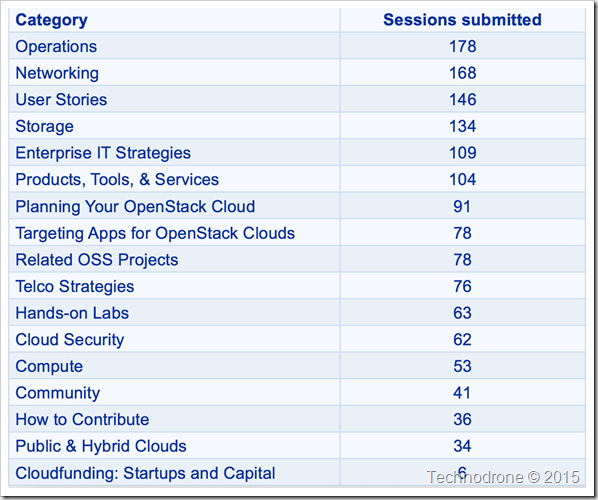
Here are the number of sessions submitted for each track:
(Please Note – these are based on the pure number of submissions – and not what has been accepted. This is not an exact science – there could be a number of reasons why they are ranked like this – but these are my thoughts and ideas on the data below)

session numbers

What is the most popular track

Operations - the one part that the OpenStack community is still struggling to get their input back into the projects. For a number of reasons. Be it inclusion, methodology, culture or mindset.

For me this is / should be (also for everyone that is involved in OpenStack as well) a bright and shiny beacon. Claiming that this is either the most important aspect or the most pressing need that people want to hear about or want to talk about might be going a bit far, but it is way, way up there.

OpenStack Summits should be about the technology, not about how keep the bits and bytes up and running, deployed and working in an efficient manner.

Next up on the list. Community and How to Contribute. Way down there in at the bottom. Is that because people already know how to do it? Because people have given up on trying?

This is something that the community as a whole should invest more in making it part of the culture and making the bar much more accessible to all.

Hands on Labs. The number of sessions proposed as labs is growing. Maybe it is time to think about a centralized solution specifically for the summit?

Neutron (a.k.a. Networking). The hardest part about a cloud is the networking part. I have said this before and will continue to preach it from the rooftops.

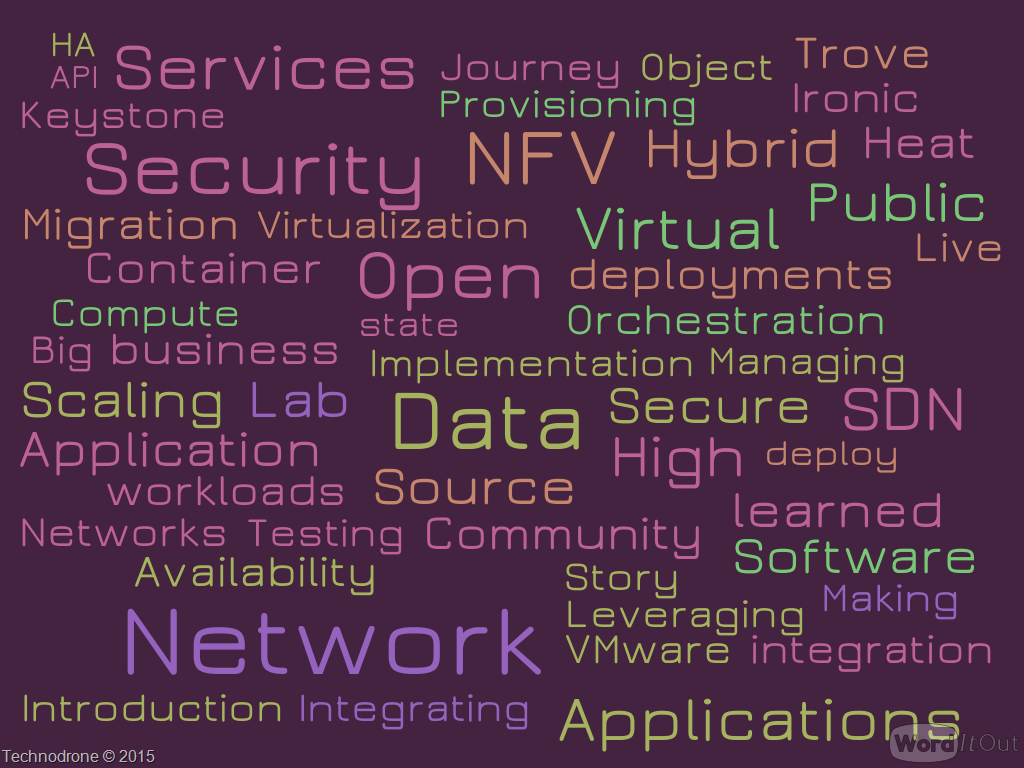
I took the liberty of creating a word-cloud of from all the words in all the submissions according to recurrence.

Word Cloud

It makes you think..   :)

You have only one more day to vote – go and make your voice heard!

2015-07-13

Registration is Open for the OpenStack Tokyo Summit

Even though we still do not know what the next release of OpenStack will yet be called (due to some community naming issues) – this is still an event I am very much looking forward to.

Registration is open for the event.

openstack_tokyo

Early bird tickets are $600 (until August 31st, 2015)

2015-06-28

Downloading all sessions from the #OpenStack Summit

A question was just posted to the OpenStack mailing list – and this is not the first time I have seen this request.

Can openstack conference video files be downloaded?

A while back I wrote a post about how you can download all the vBrownBag sessions from the past OpenStack summit.

Same thing applies here, with a slight syntax change.

You can use the same tool – youtube-dl (just the version has changed since that post – and therefore some of the syntax is different as well).

Download youtube-dl and make the file executable

curl https://yt-dl.org/downloads/2015.06.25/youtube-dl \
-o /usr/local/bin/youtube-dl
chmod a+rx /usr/local/bin/youtube-dl

The videos are available on the OpenStack Youtube channel.

What you are looking for is all the videos that were uploaded from the Summit, that would mean between May 18th, 2015 and May 30th, 2015.

The command to do that would be

youtube-dl -ci -f best --dateafter 20150518 \
--datebefore 20150529 https://www.youtube.com/user/OpenStackFoundation/videos

The options I have used are:

-c - Force resume of partially downloaded files. By default, youtube-dl will resume downloads if possible.
-i  - Continue on download errors, for example to skip unavailable videos in a playlist.
-f best - Download the best quality video available.
--dateafter - Start after date
--datebefore – Up until date specified

Be advised.. This will take a while – and will use up a decent amount of disk space.

Happy downloading !!

2015-06-01

The OpenStack Summit Kilo Summit - Recap

I have been home for just over a week from my trip to Vancouver for the OpenStack Kilo Summit (or Liberty Design Summit – take your pick).

It was a whirlwind of week, jam packed with sessions, conversations, meetings, presentations and community events.


There were a number of insights that I took with me and I would like to share with you in this post, and also in some upcoming posts in the future.

1. OPs is a real thing


There was a dedicated OPs track at the summit. Before we go into what actually happened there – I would like to clarify what I mean as OPs and if this is any different to the perception of how it is defined by the OpenStack community.

For me an operator is primarily the person that has to actually maintain the cloud infrastructure. This could be a number of things:
  • Create packages for installing OpenStack
  • Actually installing OpenStack
  • Making sure that OpenStack keeps up and running
  • Monitors the infrastructure
  • Upgrades the infrastructure

There are also end-users, and these are the people that actually use OpenStack:
  • Provision instances
  • Deploy applications on top of those instances
  • Create tenants/users/projects

For the OpenStack Community – sometimes these two groups are one and the same, and in my honest opinion they definitely are not – and should not be treated as such. It is taking time, but I think that the community is starting to understand that there are two distinct groups here, which have very different sets of needs, and should be catered to quite differently

There was a significant amount of discussion of how Operators can get more involved, and honestly I must say that the situation has improved – drastically – in comparison to the situation 12 months ago.

There are a number of working groups, the Win The Enterprise WG, the Product WG, the Monitoring and Logging WG, all of these have been meeting over the last year to try and hash out ways of getting more involved.

One of the interesting discussions that came out as a result (well perhaps not directly but I assume that I had something to do with it) of me running for the OpenStack TC was how does the OpenStack Community want to acknowledge those people that are not committing code but are contributing back into the community. To get some more background – I refer you to these threads on the mailing list.

Something that kept on coming up again and again in sessions was that the Project groups are looking for more and more feedback from the people operating and deploying OpenStack, but the process of getting that feedback is broken/not working/problematic.

I do understand that the TC (and OpenStack) would like to protect the most valued resource that OpenStack has – and that of course is the people writing the code.

But there has to be an easier way of allowing people to submit the feedback – and perhaps there is…
A way for Operators/Users to submit feature requests.

2. Vendors are involved in OpenStack – and they are here to stay


They are not there for the good of their hearts. They are there because they want to make money, and a lot of it. That is one (but not the only) reason why they contribute to open source projects.

OpenStack is no different. Each and every one of the vendors involved (and I will not name companies – because the sheer size of the list is just too long) are there to increase their market share, their revenue, their influence.

And that is a difficult dance to master. They are the ones providing resources to commit code and there are times where the agenda behind that is not purely community driven. This post – sums it up pretty well.

As OpenStack has grown he says its turned into a corporate open source project, not a community-driven one. He spent a day walking around the show-floor at the recent OpenStack Summit in Vancouver and said he didn’t find anyone talking about the original mission of the project. "Everyone’s talking about who’s making money, who’s career is advancing, how much people get paid, how many workloads are in production," McKenty says. "The mission was to do things differently."


OpenStack is not a small community project any more – where everyone knows each other by name/face/IRC handle. It has grown up, come of age.

8027924487_8de68d940d_z
For better or for worse. Stay tuned for more.

As always please feel free to add your thoughts and comments below.

2015-05-17

Integrating OpenStack into your Jenkins workflow

This is a re-post of my interview with Jason Baker of opensource.com

Continuous integration and continuous delivery are changing the way software developers create and deploy software. For many developers, Jenkins is the go-to tool for making CI/CD happen. But how easy is it to integrate Jenkins with your OpenStack cloud platform?

Meet Maish Saidel-Keesing. Maish is a platform architect for Cisco in Israel focused on making OpenStack serve as a platform upon which video services can be deployed. He works to integrate a number of complementary solutions with the default out-of-the-box OpenStack project and to adapt Cisco's projects to have a viable cloud deployment model.

At OpenStack Summit in Vancouver next week, Maish is giving a talk called: The Jenkins Plugin for OpenStack: Simple and Painless CI/CD. I caught up with Maish to learn a little more about his talk, continous integration, and where OpenStack is headed.

Interview


Without giving too much away, what can attendees expect to learn from your talk?

The attendees will learn about the journey that we went through 6-12 months ago, when we looked at using OpenStack as our compute resource for the CI/CD pipeline for several of our products. I'll cover the challenges we faced, why other solutions were not suitable, and how we overcame these challenges with a Jenkins plugin that we developed for our purposes, which we are open sourcing to the community at the summit.

openstack_summit_logo

What affects has CI/CD had on the development of software in recent years?

I think that CI/CD has allowed software developers to provide a better product for their customers. In allowing them to continuously deploy and test their software, they can provide better code. In addition, it has brought the developers closer to the actual deployments in the field. In the past, there was a clear disconnect between the people writing the software and those who deployed and supported it at the customer.

How can a developer integrate OpenStack into their Jenkins workflow?

Using the plugin we developed it is very simple to integrate an OpenStack cloud as part of the resources that can be consumed in your Jenkins workflow. All the users will need is to provide a few parameters, such as endpoints, credentials, etc., and they will be able to start deploying to their OpenStack cloud.

How is the open source nature of this workflow an advantage for the organizations using it?

An open source project always has the benefit of having multiple people contributing and improving the code. It is always a good thing to have another view on a project with a fresh outlook. It improves the functionality, the quality and the overall experience for everyone.

Looking more broadly to the OpenStack Summit, what are you most excited about for Vancouver?

First and foremost, I look forward to networking with my peers. It is a vibrant and active community.

I would also like to see some tighter collaboration between the operators, the User Committee, the Technical Committee, and the projects themselves to understand what the needs are of those deploying and maintaining OpenStack in the field and to help them to achieve their goals.

One of the major themes I think we will see from this summit will be the spotlight on companies, organizations and others using the products. We'll see why they moved, and how OpenStack solves their problems. Scalability is no longer in question: scaling is a fact.

Where do you see OpenStack headed, in the Liberty release and beyond?

The community has undergone a big change in the last year, trying to define itself in a clearer way: what is OpenStack, and what it is not.

I hope that all involved continue to contribute, and that the projects focus more on features and problems that are fed to them from the field. It is fine line to define, and usually not a clear one, but something that OpenStack (and all those who consider themselves part of the OpenStack community) have to address and solve, together.

2015-05-13

Some Vendors I Will Visit at the OpenStack Summit

At all technology conference I always like to go on to Floor / Marketplace / Solutions Exchange – where vendors try to get your attention and market their product.

Going over the list of vendors from Summit site, the list below are some of the less know companies (at least to me) that caught my eye and I would like to go over during the summit and see what they have to say.

** The blurb I posted is something that I found on each of the respective sites, and does not necessarily provide a comprehensive overview of what each company offers **

openstack_summit_logo

Stackato
Stackato allows agile enterprises to develop and deploy software solutions faster than ever before and manage them more effectively. Stackato provides development teams with built-in languages, frameworks and services on one single cloud application platform, while providing enterprise-level security and world-class support.

Akanda
Akanda is the only open source network virtualization solution built by OpenStack operators for real OpenStack clouds. Akanda eliminates the need for complex SDN controllers, overlays and multiple plugins for cloud networking by providing a simple integrated networking stack (routing, firewall, load balancing) for connecting and securing multi-tenant OpenStack environments.

Appcito
Appcito Cloud Application Front-End™ (CAFE) is an easy-to-deploy, unified and cloud-native service that enables cloud application teams to innovate faster and improve user experiences with their applications.

Appformix
Operators and developers can use AppFormix’s versatile software to remove and prevent resource contention among applications from the infrastructure without being invasive to applications. The real-time, state driven control provided by AppFormix’s intuitive dashboard allows efficient management of all I/O resources. For deeper control and customization, access to API driven controls are also easily accessible. Plan infrastructure intelligently and remove the guess work involved in managing finite server resources to create fully optimized data center infrastructure.

Caringo
Caringo Swarm leverages simple and emergent behavior with decentralized coordination to handle any rate, flow or size of data. Swarm turns standard hardware into a reliable pool of resources that adapts to any workload or use case while offering a foundation for new data services.

Cleversafe
Cleversafe’s decentralized, shared-nothing storage architecture enables performance and capacity to scale independently, reaching petabyte levels and beyond.

GuardiCore
Covering all the traffic inside datacenters, GuardiCore offers the only solution combining real-time detection of threats based on deep analysis of actual traffic, real time understanding, mitigation and remediation.

OneConvergence
One Convergence Network Virtualization and Service Delivery (NVSD) Solution takes a policy driven approach and brings in the innovative concept of “Service Overlays” to go along with “Network Overlays” to virtualize networks and services. The solution innovates and extends SDN with Service Overlays for delivering L4 to L7 services with higher-level abstractions that are application friendly.

Quobyte
Quobyte turns your servers into a horizontal software-defined storage infrastructure. It is a complete storage product that can host any application out-of-the-box. Through fault-tolerance, flexible placement and integrated automation, Quobyte decouples configuration and operations from hardware.

Scality
The RING is a software-based storage that is built to scale to petabytes with performance, scaling and protection mechanisms appropriate for such scale. It enables your business to grow without limitations and extra overhead, works across 80% of your applications, and protects your data over 200% more efficiently at 50–70% lower cost.

Scalr
The Scalr Cloud Management Platform packages all the cloud best practices in an extensible piece of software, giving your engineers the head start they need to finally focus on creating customer value, not on solving cloud problems.

StorPool Storage
StorPool is storage software. It runs on standard hardware – servers, drives, network – and turns them into high-performance storage system. StorPool replaces traditional storage arrays, all-flash arrays or other inferior storage software (SDS 1.0 solutions).

Stratoscale
Stratoscale’s software transforms standard x86 servers into a hyper-converged infrastructure solution
combining high-performance storage with efficient cloud services, while supporting both
containers and virtualization on the same platform.

TransCirrus
Core, storage and compute nodes connecting via Extreme Networks

Tufin
Security Policy Orchestration for the World's Largest Enterprises.
Managing security policies on multi-vendor firewalls & cloud platforms.

2015-05-11

Get Ready for the OpenStack Summit

The OpenStack community is converging on Vancouver next week for the bi-annual summit for all things OpenStack.

openstack_summit_logo

I am glad to be joining the event and I would like to share with you a short outline of what public events and activities I will participating in.

The rest of my time will be spread out over the Cross-Project workshops, the Ops sessions, other sessions and activities.

I am really looking forward to this event and please feel free to come and say hello.

2015-04-20

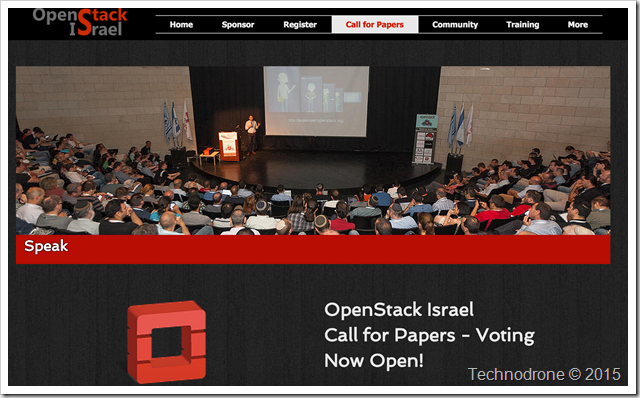
OpenStack Israel CFP Voting is Open

I would like to bring to your attention that the voting for the sessions for the upcoming OpenStack Israel Summit on June 15th, 2015 is now open.

Make your voice heard and participate in setting the agenda for the event!

image

You can find more information and the presentation that I gave last year in this post Recap - Openstack Israel 2014 #OpenStackIL and for your convenience I have embedded the recording below.

2014-11-05

How Operators Can Get Involved in Kilo #OpenStackSummit

I participated on Monday in the Ops Summit: How to get involved in Kilo, and as these sessions are not recorded I wanted to convey the messages that were conveyed at the session.

openstack_summit

But first, the Ops Summit is a mini 2-day set of sessions that were introduced at the previous summit to get the feedback of the people actually using OpenStack and their problems and issues that they are encountering. A great and formidable initiative on the part of the Foundation – still it is one that I think should be done before you start developing code, but that is only my humble opinion.

There were a lot of the PTL’s and TC members there, showing that they are serious and listening to the community – not the developer community, but rather the Operators.

I raised the following question in the session.

Being an operator – a guy that uses, deploys, manages, troubleshoots and supports OpenStack. I do not have developer experience, I do not have a team of developers at my disposal.

How would you (“Openstack”) want us to contribute?

The feedback was that they would like hear the problems we are having, submit the user stories, the issues, the pain points back to the developer community. This can be done by submitting bugs, by asking the questions on http://ask.openstack.org/ or on the IRC channels.

Tell your stories, publish what you have achieved, and even post the problem that you encountered, and answer your own question if you solved it. The http://ask.openstack.org/ receives a lot of Google traffic so it makes things easier for others to find.

Another item that was raised was that the TC would like to see more Operator feedback on the specs that are being added for each cycle. There is a new portal where all the proposed blueprints are being published – in a nice and collated fashion.

specs

They are organized per project and will point you to blueprint in question. They ask that you leave your feedback. I actually find this to be misleading. Where do I leave feedback? On that page? On the blueprint? On the Gerrit discussion?

There was some feedback towards the PTL’s and the TC from the audience regarding the fact when people do submit blueprints and bug fixes (especially newbies) the probability of receiving negative reviews (-1’s) on the submission – for what ever reason - is very high. Something that perhaps could be addressed and make the process more “welcoming”.

The one thing that I found was missing – and again it is a recurring theme here that I am coming across, throughout the summit. And I think that this is a major flaw in the way these things are being done at the moment.

No-one said – give us feedback as to what you are interested in getting into OpenStack,
before we actually start writing the code.

Not after the code has been written.

This does not mean that it will be implemented – but at least you are developing for a use case. An actual use case.

Will someone use what is being written? Is the code actually going to be useable? If not what is missing to make it an adopted feature?

More on this in following posts.

2014-11-02

Putting Some Ops in the Dev - OpenStack Summit

I am currently writing this post from the plane on the way to the summit in Paris. For those of you who are living under a rock, or were completely unaware, this is the biannual "pilgrimage" of all thing OpenStack. This coincides with the Juno release that was went GA less than 3 weeks ago.

openstack_summitThis is only my second summit, I have but I am really looking forward to bumping into some familiar faces, and making new acquaintances.

It is not the first time I have said this, but I think that OpenStack is at a crucial impasse, at a time where some hard decisions have to be made, before it reaches a point of no return.

A new Technical Committee was elected recently, and already there are rumblings as to what should be the criteria for those who can voter, why is the the participation so low and is this a trend that we were going to have to get used to. To all those above, I do not have a clear answer, although I would like to add one thought.

The technical committee is elected by the ATC's (Active Technical Contributors). That is the way it should be, those who are actively putting in their time, their code into the projects, should be the one's who decide who they want as their representative. I think this was the first time where all candidates were presented with a set of questions which tried to show their point of view of how things should be going forward.

Personally, I have met one or two of them, with others exchanged an email or two, an IRC chat or two, and others I know of them just from what I read on the mailing lists.

I think there is one very important thing that is missing, and hopefully, something that will change going forward. All of the candidates, they come from the technical contribution side. They know their stuff, they know the community, but I am not sure I can say that they have large deployment experience, they have not experienced 1st hand, in the flesh, the problems, the challenges, the frustrations that those who are deploying OpenStack in the field have.

The biggest problem here is that the number of Operator's (this is what is the acceptable term is in the OpenStack community) that actually contribute code into OpenStack is minimal or close to zero.

There are numerous reasons for that, and some might say that this is not the way it should be, but I am skeptical if and when this will change. Until that happens there will never be an 'operator' perspective, or an 'Operational way of thinking' as part of the technical committee.

And again, some might this is the way it should be.

I do not. I think that is in the best interest of the foundation and of the OpenStack community as a whole to have someone with that background, with that frame of mind as part of the committee that is leading us all.

Unfortunately, this is what I see as a classical disconnect between development and operations, the antithesis of DevOps, where they should work as one, and not have the Operations people and the 'Enterprise' join in as an afterthought. That unfortunately is the case as it is today.

I hope that I can get this point through to as many people as possible at the summit.

Please feel free to come and sit down and chat with me, I would always be interested in hearing your thoughts and ideas. I am pretty easy to recognize, I gather there will not be many people at the summit with a kippah.

Of course you can always leave your thoughts and comments below as well.

2014-09-23

AWS Summit Tel Aviv 2014

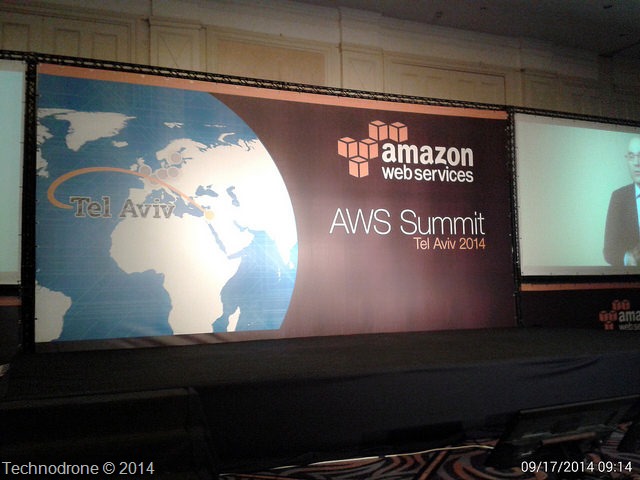
Last week I attended the AWS Tech Summit in Tel Aviv.


15132136260_1e1333a34b_z

The Conference is growing. 500 attendees 2 years ago, 1000 last year, 1500 attendees this year. There was an impressive Solutions Expo, with a quite a number of companies.

I enjoyed the Keynote given by Dr. Werner Vogels (VP & CTO). He is great and passionate speaker.

There was one thing that I found quite enlightening and one of the key takeaways for me from the conference. During the keynote Avi Kochva the CIO of Bank Hapoalim (one of the 3 major banks in Israel) who got up on stage and described how they are using AWS today.

He described the 3 points that the bank uses to determine when they can use a public cloud provider:

  1. Using the Cloud has better value, and it provides a better solution than what they are using in house
  2. Using the cloud is a a cheaper solution
  3. Since the CIO is criminally liable if information from the bank is compromised, therefore the security provided for the data in the cloud cannot be less that what they currently have.
He then mentioned publicly that the bank has no core banking data or information in the cloud. Yes they are dabbling in other stuff like providing a site – I assume on AWS – that will allow access to completely anonymized data for developing mobile apps, but I am not sure that much else is there.
This was one of my key takeaways from the conference


Evidently they do not feel that AWS is as secure as their datacenters today. Food for thought.

There a number of sessions on optimizing your workloads in AWS that I attended, and besides the pointers that were given in the sessions I came to the realization that there are so many different features you can use in AWS that it actually can make your head spin. And almost always there is a way to save money – but it not the most trivial solution, and you will not always have the correct person to point in that direction.

A company by the name of Hopon won the startup competition. A nice startup in Israel – that provides a solution for ticketing for public transport.

All in all it was a very interesting day, good always to see the other side of the Cloud, understand where things are currently moving and where other solutions still have to go.

All the slide decks from the summit can be found here.

2014-08-06

OpenStack Paris Summit Session Voting

We are down to the wire – last two days to vote for the sessions you would like see at the upcoming OpenStack Summit in Paris.

image

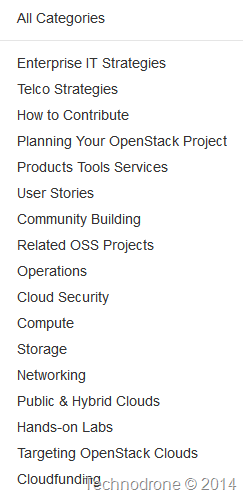
There are a large number of categories that you can choose from as you can see below:

categories

You will need an account to cast your vote.

It is quite interesting to see that some of the sessions are targeted at how you can migrate your workloads away from VMware and onto OpenStack, something that I think people will be looking into a lot more in the near future.

I also have a few sessions that you can cast your vote – if you so choose..

OpenStack Design Guide Panel

In July, 2014 The OpenStack Foundation brought twelve members of the OpenStack community together at VMware HQ in Palo Alto, California to produce the OpenStack Design Guide in just 5 days.  This panel brings many of these authors together for an open discussion about how to architecture an OpenStack cloud.

Bring your real-world questions and be prepared to talk OpenStack architecture with a panel of experts from across multiple disciplines and companies. We'll be drawing on real architecture and design problems taken from real-world experiences working with, and developing solutions, built on OpenStack. Following a brief introduction, panelists are ready to field questions from both the moderator and audience members and provide ongoing discussion the design process for architecting cloud solutions based on OpenStack.


Cisco's Media Solutions journey to the cloud with OpenStack

This session will go over how the Video Service provider group has added focus to deployment of its platform to support OpenStack. How this has evolved over the past year, the challenges that came up along the way and how these challenges were addressed - and solved.


Moving from a VMware Centric Architect to an OpenStack Architect

I have been designing VMware clouds and architectures for the past 4 years, and have now moved my focus to OpenStack. The change was not a simple one. There are terminology differences, architectural differences, differences in use cases. Differences in considerations regarding storage design, networking, automation, deployment - across almost every single aspect of the solution.

In this session you will learn what kind of change in mindset is needed, how to adapt to different architectural constraints, requirements and technical decisions.


Automated Deployment of OpenStack on Cisco UCS and Nexus

The Cisco OpenStack Installer provides automated deployment of OpenStack core components, as well as monitoring, storage, and high availability components. The release schedule of Cisco OSI parallels the community release. Where possible, Cisco OSI provides unmodified OpenStack code. Every new release of Cisco OSI follows the latest community stable release; however, in some cases Cisco might provide more recent patches that have been accepted into the OpenStack stable branches, but have not yet become part of an OpenStack stable release.

The Cisco OSI code update policy is to contribute code upstream to the OpenStack project and absorb patches into Cisco OpenStack Installer after they have been accepted upstream. Cisco deviates from this policy only when patches are unlikely to be reviewed and accepted upstream in time for a release or for a customer deadline (in such cases Cisco applies the patches to the repositories, submits them upstream, and replaces the local change with the upstream version when it is becomes accepted). Cisco also uses and contributes to modules from other upstream sources including Puppet Labs on StackForge.

In this hands on lab you will learn how to deploy OpenStack with the the Cisco OSI - knowledge that you will be able to take back with you to your organization and utilize for your own deployments.


Bringing Operators, Users and Developers closer together

This session proposal came as a result of a conversation on a blog post with Stefano Maffulli with regards to the acceptance of non-developers into the OpenStack world.

What tools are needed to interact with the developers - and the "developly challenged" people who are now starting to interact with wider OpenStack community. Because of the plethora of tools and the substantial on-ramp and learning curve in order to adapt - non-devs are finding it hard to contribute-voice their concerns or help.

This session will go over the tools used today, which tools should be used and when - and what we can expect in the future

Vote!

(source: https://www.flickr.com/photos/theresasthompson/2999130055/)

Remember – you are the one who decides what content you want to see – your vote counts!

2014-07-22

OpenStack Summit - It’s all about the Developers

This one has been sitting in the drafts for a while.

What pushed me to publish and finish this post was an article posted by Brian Gracely,
Will Paris be the last OpenStack Summit?

The Openstack Summit is actually two separate tracks – one for users, and a second for developers. It is just by “chance” (not really) that they are held at the same location – at the same time – because they are catered for two very different audiences.

This is very apparent – even in the logo for the summits.

openstack-cloud-summit

It is even confusing sometimes in regards to what the name of the summit is? Will this be the Juno summit (if you ask an Operator/User – yes it will) or is it the Kilo summit (Developers with give you a thumbs up here).

How the event works?

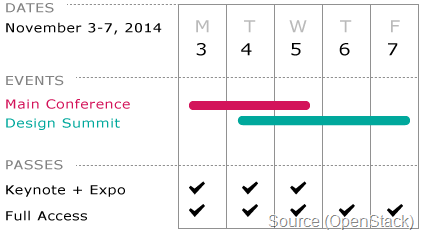
5 days. the first 3 are the Main conference, and the last 4 is the Design Summit.

schedule

And of course from the mouth of babes..

The Design Summit sessions are collaborative working sessions where the community of OpenStack developers come together twice annually to discuss the requirements for the next software release and connect with other community members. It is not a classic track with speakers and presentations. (The Design Summit is not the right place to get started or learn the basics of OpenStack.)

Steve Ballmer – you remember him? He loved his developers….

Developers, Developers, Developers

The OpenStack Foundation treats the OpenStack Developers – differently. They are the people who create the product. Therefore they receive special treatment.

And by special treatment I mean:

  • The Design Summit is called a Summit, the rest of it is called the Main Conference
    (see above)
  • A completely different part of the conference only for developers – this includes:
    • Separate rooms
    • Separate schedule
    • Separate website for schedule
    • Separate submission process and voting for Design sessions
  • Constant refreshments and treats (M&M’s and Snicker bars galore, drinks, fruit)
  • Brainstorming area outside the discussion rooms
  • Multiple power outlets in every single room and everywhere
  • Every single ATC (Active Technical Contributor) receives a free pass to the summit.

    Individual Members who committed a change to a repository under any of the official OpenStack programs (as defined above) over the last two 6-month release cycles are automatically considered ATC.

Is this unfair – perhaps – but then again – these are the people who are creating the product – so it is in the Foundation’s best interest to keep them engaged, comfortable, happy and available to continue to contribute to the community and the products.

Back to Brian Gracely’s post. Because of the developers there will always be a OpenStack summit. Will it be the same as the past and upcoming summit – I do not know. But it is in the best interest of the Foundation to have the people developing the products, developing the projects to come together, talk, schmooze and also get the details hacked out of what will happen in the upcoming 6 months and the future directions of the product.

So in response to Brian – I still think that the Foundation will hold a summit – and it will always be its central event. The same way that all the major vendors have their own big Conference (Cisco Live, Redhat Summit, VMworld, etc.) every single year, but on the other hand they will make sure they have booths at all the other conferences as well (as a sponsor) it will be the same for OpenStack.

I think that the summit will continue to be here next year in 2015 and beyond.

2014-07-21

Recording of my Presentation at OpenStack Israel 2014

Embedded below you can find the recording of my session
"OpenStack in the Enterprise - Are you Ready?"

You are welcome to go over the blog post I wrote about the event.

The full playlist of all the sessions can be viewed here

I have already submitted a few sessions for the upcoming summit in Paris.

2014-06-18

Back from the OpenStack Cloud Summit

This is a re-post of my article, originally published on The Ravello Blog.

Last month I attended the OpenStack Cloud Summit in Atlanta. It was a very interesting experience. I learned a lot of things from the people there, from the organization, and how the OpenStack cloud community works.
Without a doubt, the people who are writing the code are extremely talented. They are doing unbelievable work writing things that make something out of nothing – with just a few lines of code transform your whole system into a cloud that allows you do a huge number of things. It is absolutely amazing.


Not just for developers

Unfortunately, they don’t always understand that clouds have not really been used or built only for developers to write the code or for users to consume the cloud resources. There is a need to recognize the existence of a third party in the equation – the people who operate and manage the cloud, including the infrastructure. As a result, there are issues that have not yet been addressed but need to be considered and integrated into the system.

An operator is not a developer, and a developer is not an operator. No matter how much people talk about DevOps, there is still some kind of disconnect between the two groups. I could see a huge difference between the two groups at the conference. I had expected to see a more integrated community and was surprised by the extent of the divide.

Enterprises are definitely looking to OpenStack for the purpose of deploying cloud infrastructure in their organizations. There are a number of very large providers that are looking to deploy OpenStack as a service that they will resell to customers. The majority of those looking to OpenStack are looking to use it to deploy their own internal clouds.


Obstacles to adoption


There are a number of obstacles that are slowing down the adoption of OpenStack cloud.

The upgrade process and migration process between versions is problematic, and any kind of change to the infrastructure affects the underlying workloads. One of the most frequently heard requests from the enterprise point of view is to make the upgrade possible with zero downtime for underlying workloads.
Yes, they have taken huge steps in that direction. But they aren’t there yet. It will take time. Until then people need to understand and make their decisions accordingly. The enterprise can build infrastructure and processes around these limitations, and the need to have downtime for upgrades, or wait until features are available in the regular code.

Another thing that I noticed is that there are a number of “distributions” of OpenStack. I don’t think the use of the term “distribution” is apt here. There is only one OpenStack software. Yes, you have Redhat, which deploys Redhat OpenStack one way, and Ubuntu, RackSpace and others that deploy OpenStack in other ways, but the software in essence is the same.

The software takes the same code from the OpenStack foundation. These are not different distributions, they are different deployment methods. Even in those cases where additional pieces are added to the system package, in essence the software is the same. The problem is that these distributed solutions are not interchangeable. The solutions can be good for one thing and not so great for another. You cannot easily mix and match solutions, particularly with different operating systems.

There are currently no simple solutions for backing up your OpenStack cloud. Some maintain that you don’t need to provide such a solution, but this is the kind of thing that the enterprise may want, or provide as an added benefit to their customers.


OpenStack as a disrupting technology


OpenStack is a disrupting technology. It is making people think differently and work differently. It is making IT work differently. One of the contentions raised at the Summit addressed the need to fix the features without disrupting things. For example, there are features with problems from four versions ago that have not been completely resolved. In the interim, there have been some 17 other products introduced into the OpenStack product and surrounding infrastructure. Meanwhile those original features have not been fixed. People want to see OpenStack fix what’s there before investing effort in making the product even brighter and shinier.


Emergence of OpenStack ecosystem


There is an ecosystem evolving around OpenStack. For now it is a very small ecosystem. For example, there are people who provide monitoring solutions or deployment solutions based on OpenStack. This ecosystem is limited, though I expect it to continue to grow. (The ecosystem around VMware, for example, is much larger. It includes security, compliance, replication, backup , disaster recovery, and automation solutions.)

I praise the OpenStack Foundation for trying to commit to providing better solutions for operators. A half day of sessions was devoted to topics of interest to operators. The ensuing discussions were enlightening. Not everybody agreed about everything. But in my opinion, this was definitely a step in the right direction. The Summit was a great learning experience for me, and would definitely plan to attend future OpenStack events.

2014-06-09

Recap - Openstack Israel 2014 #OpenStackIL

14140667409_0a775784c0_o

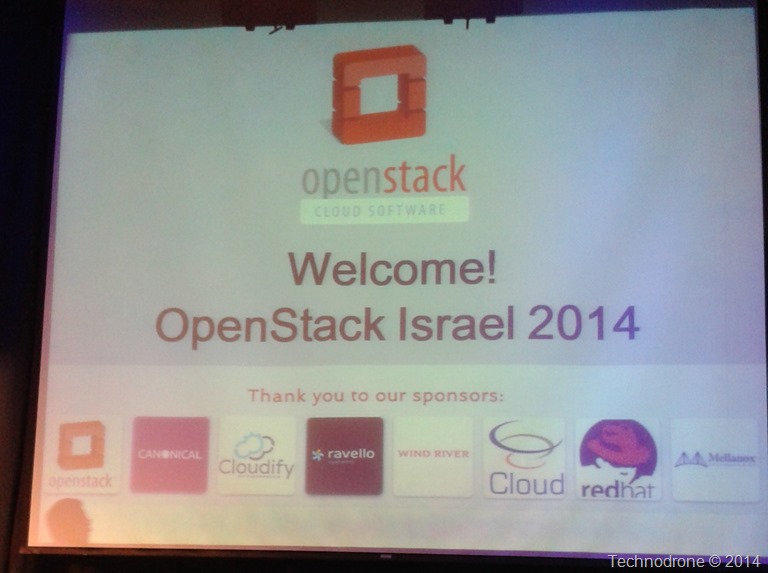
It was a great event. They were expecting 300+ people at the event, and almost 500 people were there - it was really full - but not crowded.

Slide Decks from the whole day can be found here.

The slides from my session are embedded below, and I would like to add a few words to expand on the content.

OpenStack is an amazing community - very different from the VMware one I am so acquainted with - and yet very similar in many ways.

But I will iterate what I said in my session. If you are looking for a 1 to 1 comparison between your current virtual Infrastructure - and for arguments sake - let's say it a VMware one - you will not find a compatible solution or even an easy migration from one product to the other.

OpenStack is a cloud platform, it can be deployed on-premises (did you notice I did not fall into the semantics trap there) but it is a cloud platform. That means that will be a part of your current application infrastructure that will not run well on OpenStack - due to the nature of these applications - they were never designed for the cloud. They rely heavily on a sound and robust infrastructure below - which is something you cannot assume (or maybe should not assume) to have with OpenStack.

A few nuggets from the day - and quotes that I think are worth sharing.


2014-05-28

OpenStack Israel 2014 #OpenStackIL

I would like to invite you all to join me at the OpenStack Israel Conference that will take place next week on Monday - June 2nd, 2014.

openstack-israel

There is a stellar (their words – not mine) lineup of speakers – with a number of guests from across the globe.

I highly enjoyed my experience at the last conference where I presented a session on
OpenStack for VMware Admins.

I will also be presenting at this event as well. It is a great honor.

OpenStack in the Enterprise - Are you ready?

OpenStack is becoming more popular - that is obvious - but are you ready to have it host your Tier-1 applications?

In this session we will discuss what needs to be done in order to provide a stable management plane for the OpenStack - what progress has been made over the years and where we still need to go.

There are a number of solutions out there today from a number of vendors, with a lot of high level information of how to accomplish this. Unfortunately there is no one standard and this session will attempt to be your HA guide to OpenStack Nirvana.

We will also discuss some of the pain points that might inhibit your adoption of OpenStack into your Enterprise.

Some of the keynote speakers will include (full agenda here)

There are several other sessions by prominent figures in the OpenStack community as well.

  • Monty Taylor – Distinguished Technologist and OpenStack Thought Leader, HP
  • Nati Shalom – CTO & Founder, GigaSpaces
  • Mark Mcclain – Principal Architect, Yahoo
  • Thierry Carrez - Chair of the Technical Committee and Release Manager, OpenStack.

And for the first time, this year there are also some technical workshops that attendees will be able get some hands-on time with technology.

I am looking forward to this event, and will be sure to share my experience after the event – and of course the slide deck and recording when they are made available.

If you are interested you can follow my participation as I will be live-tweeting from the event. #OpenStackIL

2014-05-25

#vBrownbag at the OpenStack Summit

There is only one thing I can say about the vBrownbag crew and their work

They are AMAZING!!!!

The crew on site was Jeremiah Dooley, Josh Atwell, Alastair Cooke and Eric Wright, Damian Karlson.

Here is their summary post - #vBrownBag was at OpenStack Summit Atlanta

The setup was super professional, the stream quality was amazing – kudos to the event team that provided super bandwidth!

The location was perfect and the sessions were great.

You can find the full playlist of all the sessions here

The session I presented is embedded below, and will give some insight into what I am currently working on – and where we are headed with OpenStack

Of course automation is a great thing – so Just to leave you with a quick way to download all of the presentations for your offline viewing – I used youtube-dl.

youtube-dl is a small command-line program to download videos from YouTube.com and a few more sites. It requires the Python interpreter (2.6, 2.7, or 3.3+), and it is not platform specific. It should work in your Unix box, in Windows or in Mac OS X. It is released to the public domain, which means you can modify it, redistribute it or use it however you like.

So simple

youtube-dl -cit --max-quality FORMAT https://www.youtube.com/playlist?list=PL2rC-8e38bUUDMikhKMpAT1KhDljl08wZ